
AI can now draft your emails, summarize your meetings, write your code, and build your slide deck before you’ve finished your coffee. So it’s fair to ask: if a machine can do all that, do human communication skills still matter?
I believe they matter more. Handing your voice over to AI is a mistake.
When Everyone Has Access to the Same Tools
Think about how “vibe coding” has taken off. People with no programming background are building working apps because AI fills in the skills they’re missing. That’s impressive, and it also means technical skill is becoming less of a dividing line. When more people can produce solid work, the work itself stops being the thing that sets you apart.
What does set you apart is what you do with it. Can you explain it? Can you tell people why it matters? Can you persuade the person with the budget to say yes? Those are human-to-human skills, and AI doesn’t make them obsolete. It raises the stakes.
The Work Doesn’t Speak for Itself
I learned this the hard way, long before AI was part of the picture. Early in my engineering career, I spent a lot of time heads-down in the lab, assuming my hard work would speak for itself. It didn’t. I wasn’t the one speaking for my work, and I missed out on building relationships along the way.
AI makes that old mistake easier to repeat. If a tool is doing more of the work, the temptation is to let the output do the talking. But output doesn’t present itself, defend itself, or explain why it matters. Someone has to, and that someone is you.
What Humans Still Have to Do
Even as AI handles more of the work, people still need to:
- Set the strategy and vision, and communicate it to the humans who will carry it out.
- Interpret what AI produced and decide what it means.
- Explain the results to colleagues, clients, and leaders in terms they actually understand.
- Persuade others to act on what was found.
Notice that every item on that list is a conversation between people. The better AI gets at producing the work, the more your value shifts to communicating it.
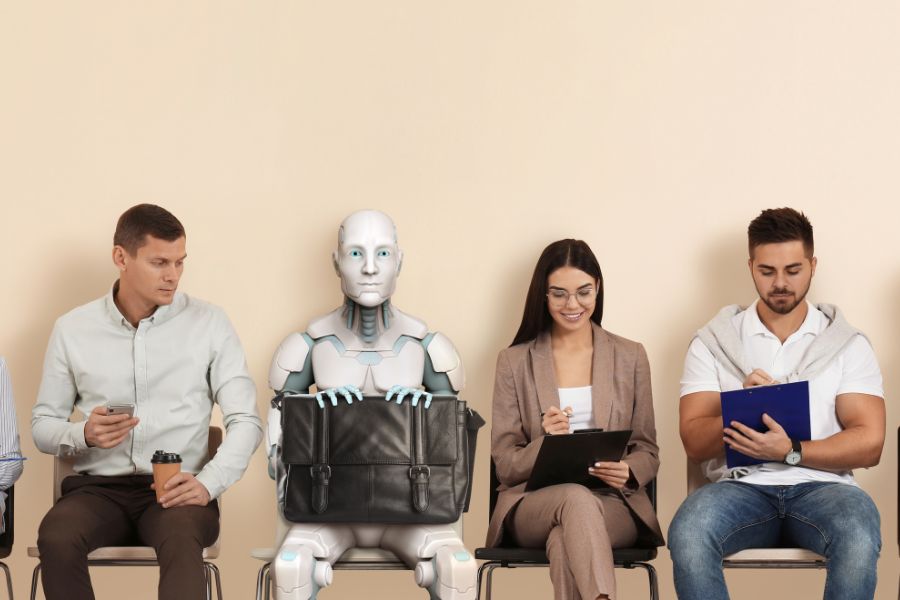
Which Skills Matter Most
If I had to name the number one skill, it’s clarity. That means:
- Explaining technical material so your audience can follow it.
- Being concise and staying on point.
- Telling a story with your results instead of reciting them.
- Being persuasive.
It’s not as hard as it sounds once you learn how. I use what I call my “Three Keys to Communication” and layer them over proven structures, so you’re not struggling to figure out what to say every time you need to explain something. You also need to be able to do impromptu speaking with confidence, because the best questions in a meeting rarely come with advance notice. (If that’s an area you want to build, here’s how to develop impromptu speaking skills.)
Why Letting AI Do the Talking Is the Wrong Move
Here’s where I want to push back on a growing habit: handing the communication itself over to AI. A few reasons I’d think twice.
You Weaken Your Communication Muscle
Communication is a skill, and skills fade when you stop using them. Every presentation or message you outsource is a rep you didn’t do. Over time, people who lean too hard on AI often start doubting their own ability to communicate, which makes them lean harder. That’s a loop you don’t want to be in.
Your Presentation Becomes a Book Reading
If you have AI write a script and then read it to your audience, you might as well have emailed a report. A presentation should be a discussion with your audience, not a book reading. Scripts also tend to backfire when the conversation goes off-plan, which is exactly when you need to think on your feet. (I’ve written about why scripts create a false sense of security.)
You Lose Your Voice, and Your Uniqueness
This is the big one. Your voice is what makes you you: your perspective, your personality, the way you explain things. When AI writes everything, that disappears, and what’s left is something anyone could produce. When anyone can produce what you produce, you become replaceable. You become a commodity.
What to Do This Week
The advice is simple: keep speaking. Take advantage of every conversation and presentation opportunity that comes your way to hone your craft. Volunteer to explain the project in the meeting. Present the update instead of sending the update. Say it out loud in your own words before you check what your favoriate AI assitant would have said.
Looking for a low-pressure way to do that? I write a free weekly Substack newsletter with one small public speaking challenge delivered to your inbox every week. It’s a simple way to keep that muscle working, one assignment at a time.
AI Can Be a Useful Tool
Used well, it can be a great assistant for polishing up your communication. It should be used to you communicate, not communicate for you.
If you’d like help building the human skills that set you apart, explore my coaching programs or book a free consultation. If you’re curious what working together looks like, here’s what to expect in a first public speaking coaching session.